Power Profile: Dr. Michael Sykuta
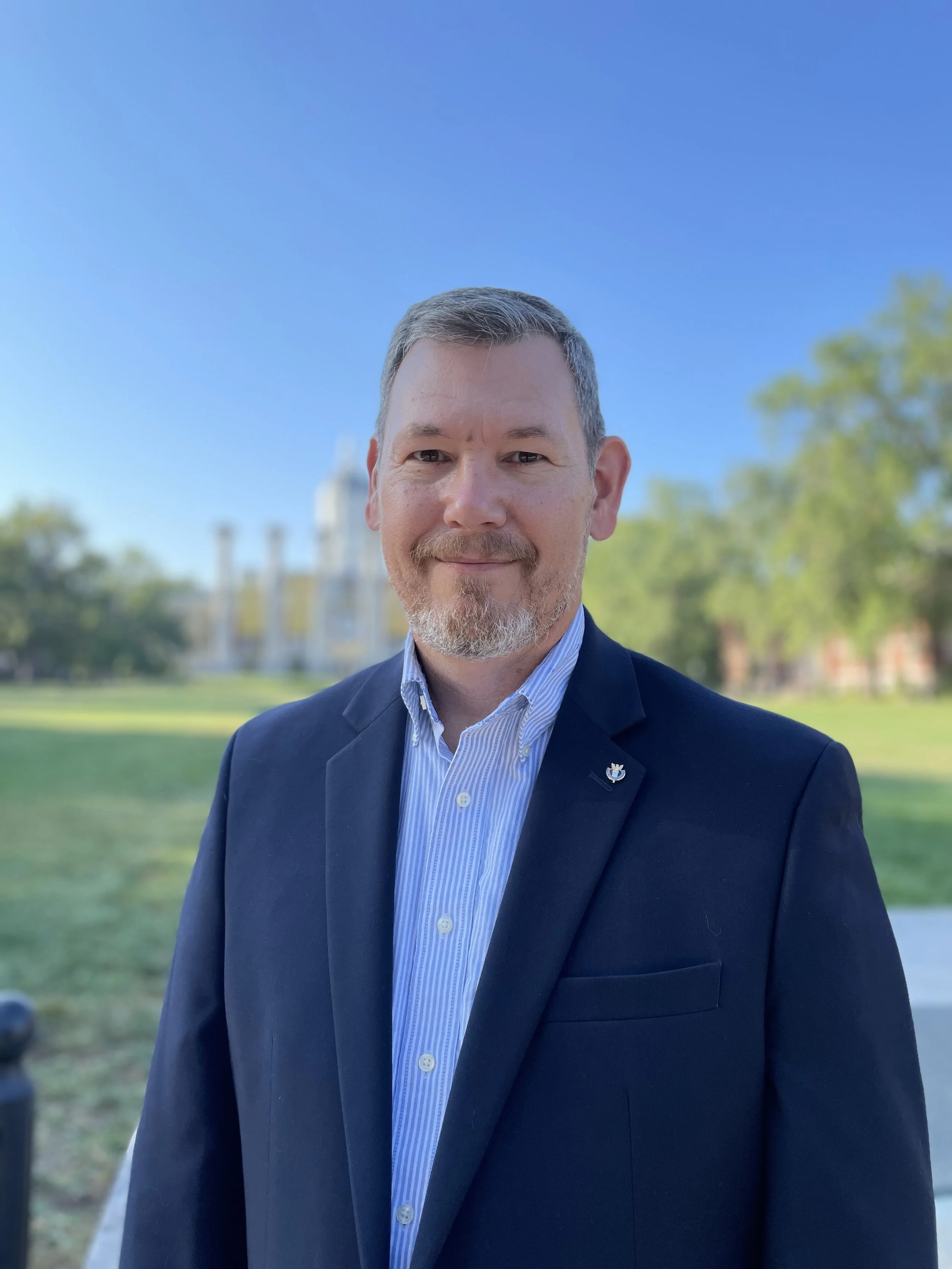
Dr. Michael Sykuta serves as the director of the Financial Research Institute and Center for Rural Energy Security. Photo provided by the University of Missouri.
Energy policy is becoming more complex as electricity demand grows, new technologies emerge and utilities plan the investments needed to serve customers for decades to come.
For economist Dr. Michael Sykuta, navigating those changes starts with good information.
As director of both the University of Missouri’s Financial Research Institute and Center for Rural Energy Security, Sykuta works at the intersection of economics, utility regulation and energy policy. Through the two organizations, he helps bring together regulators, utilities, consumer advocates, researchers and policymakers to examine complex questions from multiple perspectives.
That work is increasingly important as utilities balance affordability and reliability with the need to replace aging infrastructure and prepare for new demand from data centers, artificial intelligence, manufacturing and other industries.
It’s the kind of problem that appeals to the economist in Sykuta.
That interest in economics wasn’t always part of the plan. But once he discovered the field, something clicked.
“I just fell in love with economics and the way of thinking that economics encourages,” Sykuta said.
Energy soon became part of that interest. As an undergraduate, he wrote about the petroleum industry, then went on to earn his doctorate in economics from Washington University, where his dissertation focused on the petroleum industry and futures markets.
After years of research in contracting, business organization and regulation, Sykuta returned more directly to the utility sector in 2020 when he was asked to lead the Financial Research Institute.
The institute brings together commissioners, utility representatives and consumer advocates to discuss complex utility issues outside the constraints of formal regulatory proceedings. Its programs range from public webinars and an annual symposium to courses designed to help utility professionals better understand regulation, rate design and utility economics.
Sykuta sees particular value in creating room for thoughtful discussion among people who may approach the same issues from very different perspectives.
Those conversations have become increasingly important as utilities confront what he described as “the perfect storm of bad things.”
Years of elevated inflation have put pressure on household budgets. At the same time, utilities are replacing infrastructure that may be 50, 60 or 70 years old while navigating stressed supply chains and growing electricity demand.
Even without that growth, Sykuta said much of the existing infrastructure would still need to be replaced. New demand simply adds another layer to an already complicated equation, including questions about how new and existing infrastructure affects the rural communities where much of it is located.
Those questions are at the heart of Sykuta’s work with the Center for Rural Energy Security.
The center grew from the university’s broader investment in energy innovation. As plans developed for its Energy Innovation Center, Sykuta raised a question that went beyond what researchers might develop in a laboratory.
“Nothing that's innovated in that building is going to go to market unless there's a regulatory, economic path to facilitate it,” he recalled telling university leaders.
That perspective helped spark discussions about a center focused on the economic and policy side of energy innovation. Missouri Farm Bureau became its first supporting partner, and Ameren Missouri later joined the growing group of organizations supporting the center’s work.
A central question now guides much of that work: How do major energy decisions affect rural communities?
Generation facilities, transmission lines, pipelines and other infrastructure are frequently located in or cross rural areas even when the energy they support ultimately serves population centers elsewhere.
“Those people kind of bear the brunt of infrastructure,” Sykuta said, “and yet their voices are not really part of the conversation.”
The center brings that rural perspective into state and federal energy discussions while emphasizing objective analysis rather than advocating for a predetermined outcome.
Rural energy security, as Sykuta describes it, includes affordable, resilient and reliable energy that supports economic development while also accounting for property rights, food security and the effects infrastructure can have on rural communities.
The issue also has a national security dimension. Many defense installations are located in rural areas and depend on rural electric cooperatives, municipal utilities or rural portions of larger utility systems. The strength and reliability of those systems can therefore matter far beyond the communities they directly serve.
Although the Financial Research Institute and Center for Rural Energy Security share staff and leadership, they serve distinct purposes. The institute focuses primarily on investor-owned utilities and state regulatory processes, while the center takes a broader view of energy policy that includes cooperatives, municipal utilities, federal policy and regional transmission organizations.
What connects them is a commitment to providing information policymakers and other stakeholders can trust.
The center works with organizations that bring different interests and perspectives to energy policy, and Sykuta said the goal isn’t to produce research that tells every partner what it wants to hear. Instead, he wants its work to provide credible analysis that decision-makers can use, regardless of where the findings point.
“The worst thing for our economy is policy by vibes,” Sykuta said.
He hopes both organizations can become trusted resources for policymakers in Jefferson City and Washington, D.C., who need help understanding increasingly technical energy issues.
Away from economics and energy policy, Sykuta and his family are firmly rooted in Columbia, Missouri.
He and his wife enjoy the city’s live music scene, trails and other outdoor recreation. Sykuta also bikes regularly, a replacement for a pastime his knees no longer appreciate quite as much.
“Once upon a time, I was a runner,” he said. “My knees like to bike instead of running anymore.”
The couple also enjoys gardening and spending time outdoors. Sykuta’s three adult children have pursued careers in health care, biotechnology and public health, and his youngest son recently welcomed a baby with his wife.
Whether the issue is utility investment, affordability, rural infrastructure or national energy policy, Sykuta’s approach remains consistent: bring the relevant voices into the conversation, examine the evidence and give decision-makers reliable information they can use to plan for what comes next.
To learn more about Sykuta's work with the Financial Research Institute, please visit fri.missouri.edu. For more information on the Center for Rural Energy Security, please visit cres.missouri.edu.