Power Profile – Subash Alias
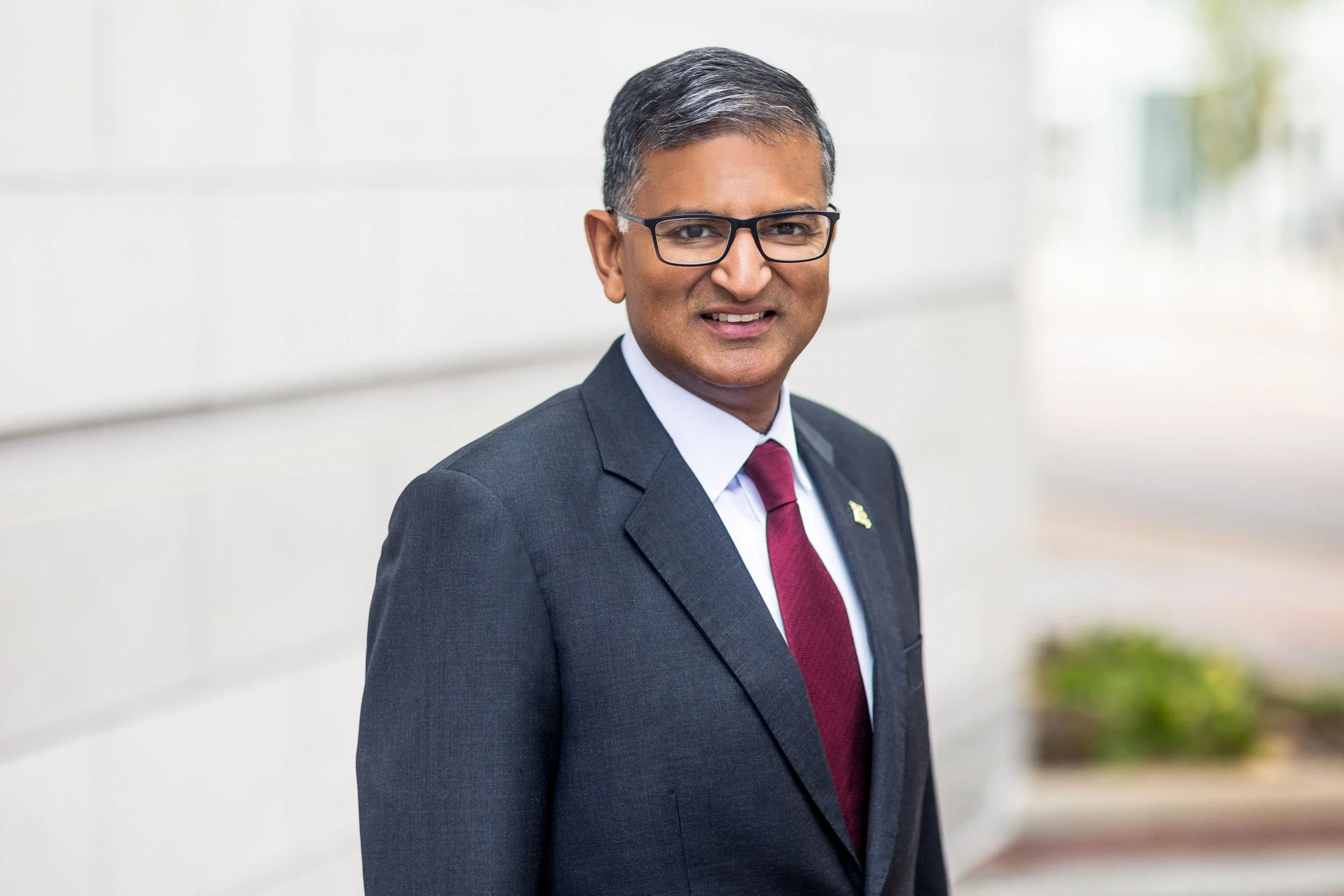
Subash Alias currently serves as CEO of Missouri Partnership. Photo courtesy of Missouri Partnership.
When Subash Alias talks about economic development, he doesn’t start with incentives, industrial sites or project announcements.
He starts with pride.
Long before he became CEO of Missouri Partnership, Alias was a college student at St. Ambrose University in the Quad Cities who found himself explaining his hometown to classmates who didn’t know much about St. Louis.
“I developed this civic pride about it,” Alias said. “Is there something I can do to promote my hometown?”
That question ultimately helped shape his career. After earning his undergraduate degree in business, Alias went to work for the St. Louis Regional Chamber and Growth Association (now known as Greater St. Louis, Inc.), where he discovered the field of economic development.
“I didn’t even know that the profession existed,” he said.
He later earned his MBA from Washington University in St. Louis and spent more than six years doing economic development work in Pittsburgh before returning to Missouri. More than 15 years ago, he joined Missouri Partnership as vice president of business recruitment. In 2019, he began leading the organization, giving him the chance to take the civic pride that first drew him to the profession and apply it statewide.
“What I love about this is that I can promote the whole state now,” Alias said. “And now I’ve gotten to know and love the entire state of Missouri.”
Today, Missouri Partnership works to attract companies, jobs and investment to the state, promoting Missouri’s strengths in areas such as advanced manufacturing, aerospace, plant sciences, distribution, geospatial technology and data centers.
For Alias, the pitch starts with listening.
“We start with, tell us about you,” he said. “Let’s first listen and hear what are the driving factors or the top two or three factors that make a company decide where they want to locate, and then how does Missouri match up with that?”
Missouri’s diverse economy, central location, AAA bond rating and strengths across several major industries all help the state compete. But Alias said companies also want to know whether a state can provide the stability and infrastructure needed to support long-term growth.
Electric infrastructure is becoming a bigger part of that conversation as more industries depend on reliable power to operate, expand and modernize. Manufacturers are investing more in equipment and automation. Distribution centers are using more robotics and sophisticated systems.
Data centers have drawn much of the recent attention, especially after Missouri landed major investments from Amazon Web Services and Google. Alias said both projects were nearly two years in the making, but he also noted that data centers themselves aren’t new. Communities have lived around them for decades.
What has changed is the level of demand, as business, communication and daily life have become more digitally connected.
“It’s crucial for our information and tech infrastructure to have data centers,” he said.
For data center projects in particular, Alias said electric service isn’t a late-stage detail. It’s often one of the first and most important questions, because “there’s no project without the power.”
That makes utility partners such as Ameren Missouri essential long before the public hears about a project. Alias said Ameren’s Economic Development team and engineers help evaluate load needs, connection studies, feasibility, infrastructure needs and utility extensions to determine whether a project can move forward.
Utilities have always focused on providing safe, reliable and cost-effective energy, but Alias said new and growing industries are changing what it takes to support business investment. Ameren, he said, has had to adapt alongside the economic development partners working to attract that growth.
For Alias, landing a project is only the beginning. The real measure of success comes in the years that follow, when a company puts down roots, expands, creates jobs, generates tax revenue and becomes part of the community.
“The success is when they expand again,” he said. “They first have their initial footprint, and then they expand and then they expand one more time. That is what success is for us.”
Outside of work, Alias is rooted in family and in Missouri. He and his wife, whom he met at St. Ambrose, will celebrate 28 years of marriage in September. They live in Glendale, and his mother-in-law lives next door. His parents also live in St. Louis County and have been there nearly 50 years.
He and his wife enjoy traveling, and Alias also has a soft spot for older cars from the 1980s. When he has the time, he flies single-engine private planes, a hobby that offers a different pace from the daily work of economic development.
Whether the work is fast-moving or years in the making, Alias said economic development depends on many people pulling in the same direction. Major projects require state, regional and local partners, elected officials, utilities and community leaders working together, often long before the public hears about them.
“Partnership is in our name,” he said. “We cannot do this work without economic development partners.”
For Alias, that message extends beyond formal economic development teams. He wants Missourians to understand the state’s strengths, speak positively about its opportunities and help tell Missouri’s story.
“We would like to deputize all 6.2 million Missourians to be advocates for Missouri, to talk up the state and be positive,” he said.
To learn more about Alias' work with Missouri Partnership, please visit missouripartnership.com.