Power Profile: Shawn Schukar
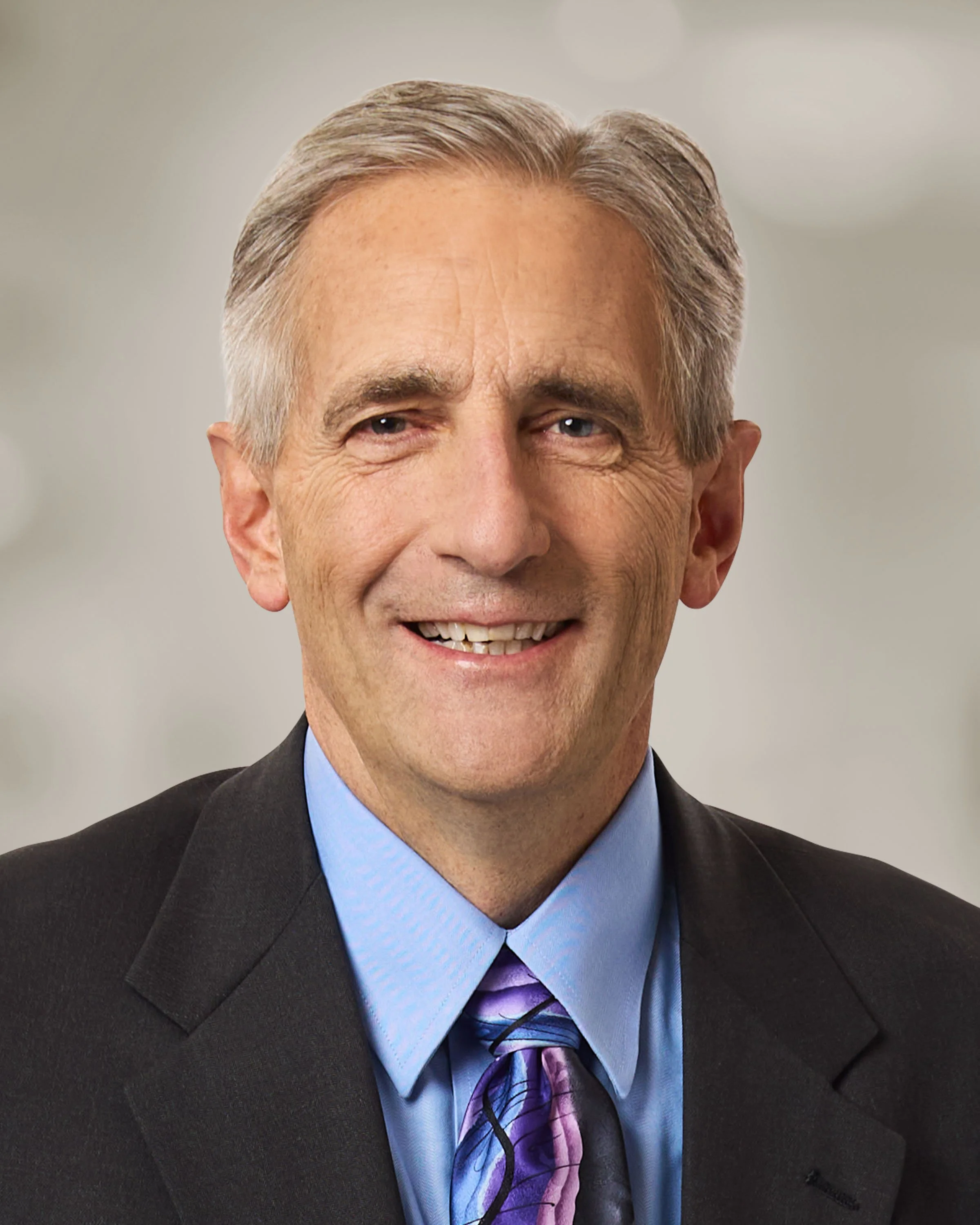
Shawn Schukar currently serves as chairman and president of Ameren Transmission Company.
Transmission rarely takes center stage in conversations about energy, but for Shawn Schukar, it’s the backbone of everything customers depend on.
“Transmission is the highway of the electric system, with the highest voltage lines like the interstate highways,” said Schukar. “It serves customers by connecting generation to distribution, and it also allows power to move back and forth across the Ameren system and across the eastern U.S. while meeting customer needs.”
As chairman and president of Ameren Transmission Company, Schukar oversees almost 8,500 circuit miles of high-voltage transmission lines across Iowa, Illinois and Missouri. Those lines form a network designed to provide customers with access to reliable electricity.
“It’s networked in a way that if part of the system goes out, there’s another pathway for customers to receive reliable power,” he said.
That flexibility allows Ameren to move power as it’s needed, access a balanced mix of generation resources and manage shifting demand across the region. In today’s interconnected grid, that coordination extends well beyond state borders. Through the Midcontinent Independent System Operator (MISO), Ameren works alongside neighboring utilities to ensure the broader system operates reliably and efficiently. MISO serves as the regional transmission operator for a portion of the Midwest, regulating the flow of electricity across 15 states and the Canadian province of Manitoba.
Each year, Ameren evaluates where loads are changing, where new generation is being added and how the grid must adapt, not just now but years into the future. This evaluation extends beyond Ameren's system, as the company also monitors neighboring systems as well. During this process, engineers assess multiple options, from upgrading existing lines to building new infrastructure or incorporating new technologies and efficiency measures – all with the goal of reliably serving customers and keeping costs low.
"We look at the system every year, but transmission upgrades can rarely be completed in a year or two, so our focus is on developing a system for the future – five, 10, 20, 30 years out," said Schukar. "The reliability and efficiency we deliver today is a result of careful planning from years ago."
Without robust transmission connectivity, customers would be limited to fewer generation options and higher reserve requirements to maintain reliability. Access to a larger, interconnected system reduces the amount of backup power utilities must maintain. This critical access supports reliability, while keeping costs low for customers.
"Access to reliable power is the expectation," he said. "When our customers come home, they expect the lights to come on and stay on. In addition to reliability, we know cost is extremely important to those we serve, and we work every day to keep the cost of our service low."
For Schukar, those priorities were shaped by experience. In the late 1990s, during a period of industry transition, a severe storm struck the Midwest at the same time several generation resources were out of service. Transmission lines were damaged, other energy resources went offline and supply tightened quickly.
“We had people out in the field prepared to shut off the power to many of our customers because of the risks to access energy resources without causing more damage to the system," he recalled.
The experience revealed how quickly reliability can become an issue and costs can escalate when the system is under strain. During the event, wholesale power prices surged to more than 20 times their typical level, a stark reminder of the financial stakes tied to grid reliability.
Throughout his career, this lesson has stayed with him. A robust transmission system protects customers not only from outages but from extreme price volatility and higher bills. Building carefully, anticipating risk and strengthening the grid before problems arise remain central to his leadership approach.
That long-term mindset is also shaped by Schukar’s personal roots. He grew up on a farm and still farms today.
“I recognize the value and the relationship people have with their property,” he said.
Because many transmission lines cross private property in rural communities, that background informs how he approaches landowner relationships. Placement of poles is evaluated to minimize disruption. Maintenance work is coordinated to reduce repeated impacts. Respect for property owners must go hand in hand with providing a broader public good, he said.
Over more than 30 years in the utility industry, Schukar has watched the sector evolve from a largely state-regulated, locally produced model to a competitive wholesale market with growing regional interdependence.
“When I first started in the industry, most of what we did was state regulated and the energy to support our customers was produced locally… everybody kind of produced for themselves," he said. "Now the system is much more dependent on an energy supply produced both locally and within the region which helps to minimize customer costs."
Today, rapid load growth driven by the reshoring of manufacturing and the technology sector is changing the pace of planning. Reserve margins are tightening, and infrastructure must be deployed efficiently. Despite those shifts, the core mission remains the same: safe, reliable service delivered at the lowest reasonable cost.
"As we are seeing large loads coming onto our system, we talk about new generation needs. The value of transmission to optimize benefits to customers is often left out of the conversation," he said. "At times, we see delays in getting critical transmission projects built, delaying value and benefits to customers. We support cutting red tape and letting local, in-state companies lead these projects to bring benefits to customers faster."
Away from the control room, Schukar describes himself simply.
“I’m a person who is blessed with the gifts God has given us,” he said.
He and his wife of nearly 45 years cherish the time they spend with their children and their families, especially their two granddaughters. The family enjoys cooking, skiing, sports and music festivals. Farming remains his personal retreat and a connection to his roots.
Schukar knows transmission may not always be top-of-mind for energy customers, but its impact is universal.
“This is an exciting industry,” he said. “We are helping to power the quality of life in this country with transmission projects that benefit everybody.”