House General Laws committee votes down electric generation choice legislation
Throughout the country, similar measures have led to higher residential electric rates
Prior to the end of the 2026 legislative session, members of the Missouri House of Representatives General Laws committee rejected legislation changing the state's electric regulatory framework to allow customers to choose who supplies their power. House Bill 2207, sponsored by Rep. Don Mayhew, R-Crocker, attempted to break up the state's investor-owned electric companies and give customers the ability to decide where their power comes from. Under the proposal, the state's investor-owned utilities would be required to divest their generation assets, forcing Ameren Missouri to sell its power plants such as the Callaway Energy Center, Osage Energy Center and others. The legislation would have allowed the state's investor-owned utilities to own the distribution side of the process but not the power plants that generate electricity.
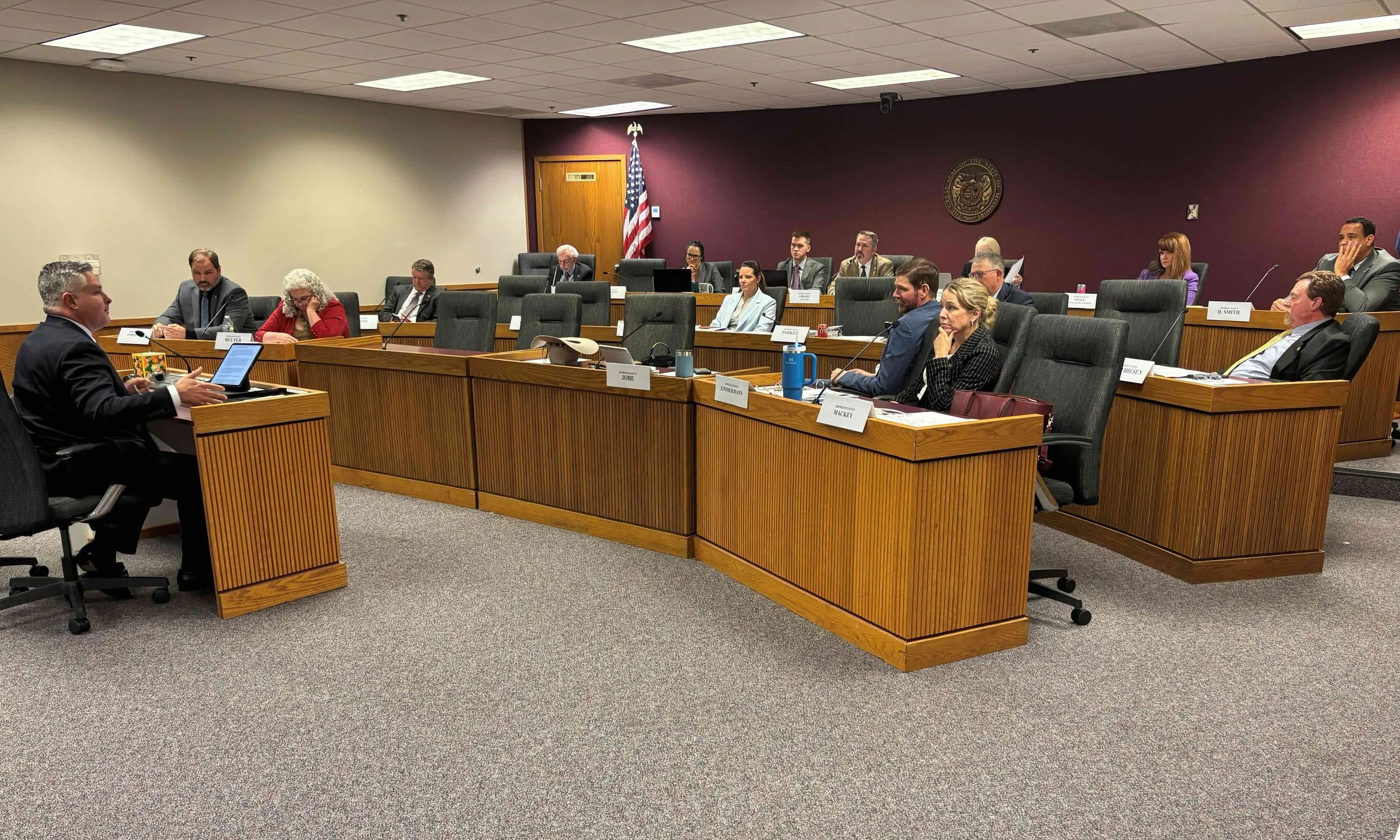
Members of the House General Laws committee hear testimony against HB 2207.
"If Missouri were to do what this legislation called for and break up the state's rate-regulated electric companies, the facts paint a grim picture — residential electric rates would go up, reliability would go down and Missouri families would suffer," said Rob Dixon, vice president of Regulatory and Legislative Affairs for Ameren Missouri.
In Missouri's current rate-regulated market, one utility is responsible for making sure there is enough power, keeping the grid safe and reliable and offering just and reasonable rates set by the Missouri Public Service Commission to their customers within their service territory. Under HB 2207, different companies would be responsible for generating, transmitting and selling electricity. Additionally, under a restructured system, the PSC would only have oversight and rate control over the distribution system.
From a cost perspective, electric rates for residential customers are often higher in restructured states than those vertically integrated, like Missouri. According to the Edison Electric Institute (EEI), a nonpartisan trade association representing utility companies throughout the country, the average residential electric rate in a restructured state was six cents higher per kilowatt hour than those vertically integrated. Additionally, EEI also reported rates for commercial and industrial customers were higher in restructured states.
“Energy reliability and cost certainty are critical to Missouri’s economic competitiveness,” said Kara Corches, president and CEO of the Missouri Chamber of Commerce and Industry. “The proposed legislation would have moved us away from the stable, pro-growth energy framework that employers are looking for when deciding where to invest.”
The committee defeated the measure by a 6-8 vote, with Republicans and Democrats voting against it. The 2026 legislative session concluded on Friday, May 15.