Power Profile – U.S. Rep. Wesley Bell
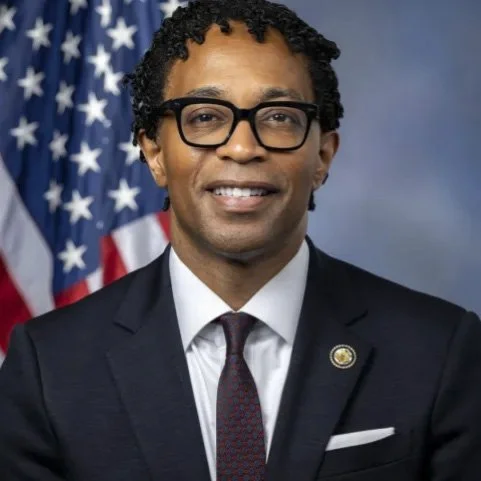
Wesley Bell represents Missouri's 1st Congressional District in the U.S. House of Representatives. Photo courtesy of U.S. Rep. Bell's office.
For U.S. Rep. Wesley Bell, public service did not begin with a campaign.
It started with a growing connection to the North St. Louis County community where he was raised.
Bell, a Democrat who represents Missouri’s 1st Congressional District, which includes the City of St. Louis and part of St. Louis County, was 19 when a friend persuaded him to coach a basketball team of 4- and 5-year-olds. What began as a reluctant favor became one of the most rewarding experiences of his life. He still knows some of those former players, who continue to call him coach.
That interest in community involvement followed him into the classroom. While teaching at St. Louis Community College’s Florissant Valley campus, Bell incorporated volunteer work into his classes, hoping students would build the same kind of connection to their community that he had discovered himself.
“I think, if anything, it lit the flame early on, not realizing what it would lead to,” Bell said.
That commitment to community involvement became especially significant in Ferguson, where Bell was already active before Michael Brown was killed in 2014. In the aftermath, people who knew him encouraged him to run for Ferguson City Council. His background in law and interest in community policing and court reform aligned with issues at the center of the city’s conversations.
Bell won the seat, beginning a path that later took him to the St. Louis County Prosecuting Attorney’s Office and eventually Congress.
Each role brought broader responsibilities, but Bell said what he finds most rewarding about public service has remained largely unchanged.
“The more things change, the more things stay the same,” he said. “That public service piece, that constituency service piece, that doesn’t change.”
In practice, that means keeping sight of the concerns people encounter at home. National debates may dominate headlines, Bell said, but families are often more concerned with paying bills, putting food on the table and keeping their children safe.
“They want to make sure that the lights are on,” Bell said. “That’s important.”
Those basic needs also shape his view of the region’s long-term future.
St. Louis, he said, is well positioned for growth because of its central location in the nation and strong health care, defense, startup, transportation and agricultural sectors.
“This region is a sleeping giant,” Bell said.
Realizing more of that potential will require the region to start “rowing in the same direction” while continuing to invest in the systems residents and businesses rely on every day.
His own experience working three part-time jobs at different times during college informs how he thinks about those needs. Access to health care, the cost of living and reliable power all belong in the same conversation.
“There are just certain things that you’ve got to have,” Bell said, including “making certain that the power is on.”
Severe weather over the past few years has made the importance of that infrastructure even more visible.
Bell pointed to tornadoes that struck North County and the City of St. Louis in 2025. He has since introduced bipartisan legislation aimed at improving transparency and accountability in the federal disaster relief process and identifying delays that can keep assistance from reaching communities quickly.
The broader challenge, he said, is aging infrastructure. Electrical service can be disrupted during storms in parts of the region, underscoring the need for continued investment in the systems that support communities day to day.
“I see those Ameren workers out there working as soon as storms hit,” Bell said. “I can’t tell you how much I appreciate that.”
He also emphasized that policymakers have a responsibility to make sure those systems receive the investment they need.
“We’ve got to also do our end of that bargain and make sure we’re investing in the infrastructure that this region needs as well,” he said.
That same philosophy extends to federal spending. St. Louis residents send billions of dollars to Washington, Bell said, and some of those resources should return through infrastructure and other projects that strengthen the region.
“All of these things are pieces to the puzzle,” he said. “When we invest those dollars into our aging infrastructure, that high tide lifts all boats.”
The benefits, in his view, extend well beyond the district itself.
“St. Louis is the economic engine of the state,” Bell said. “And when St. Louis does well, the entire state does well.”
For all the changes that have taken Bell from North County to Capitol Hill, some of the things that matter most have remained consistent.
The youngest of four boys, Bell grew up in a football-loving, union household and later gained three younger sisters after his father remarried. Family remains central to his life, and when asked what he enjoys doing outside of work, Bell joked that free time has become something of a foreign concept since arriving in Congress.
When he does get it, he spends it with family and friends, often over Monopoly, Spades or another fun, but still very competitive game.
“Just being able to have fun with the people you love, family and friends, is always a big priority for me,” Bell said.
To learn more about U.S. Rep. Wesley Bell, please visit his official website at bell.house.gov.